Initial situation
Moisture suspected — but where, and how much?
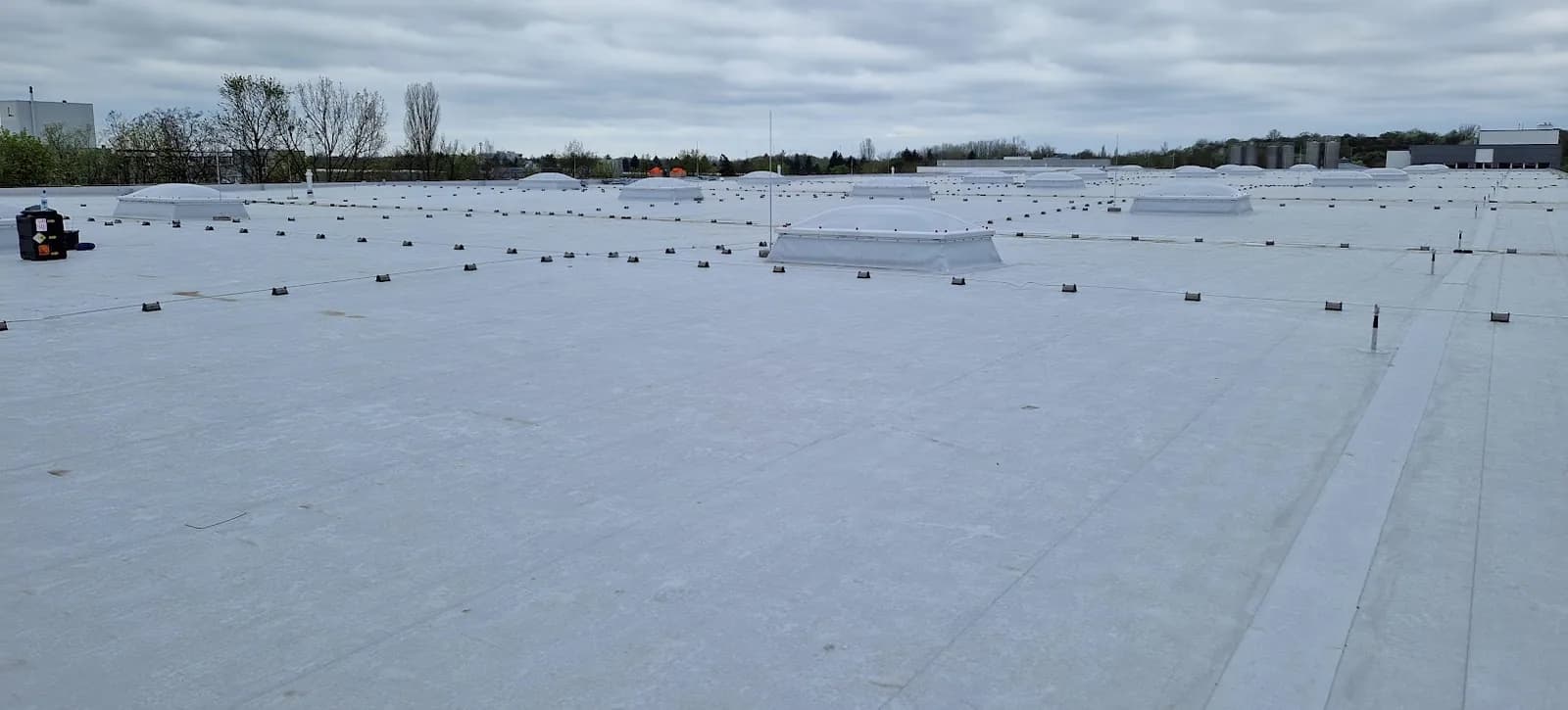
After water damage or in the case of a leaking roof membrane, the crucial question at the beginning is: How far has the moisture spread? Without reliable answers, either too much is demolished or too little is dried.
The procedure
Low-impact grid moisture measurement with the isotope probe
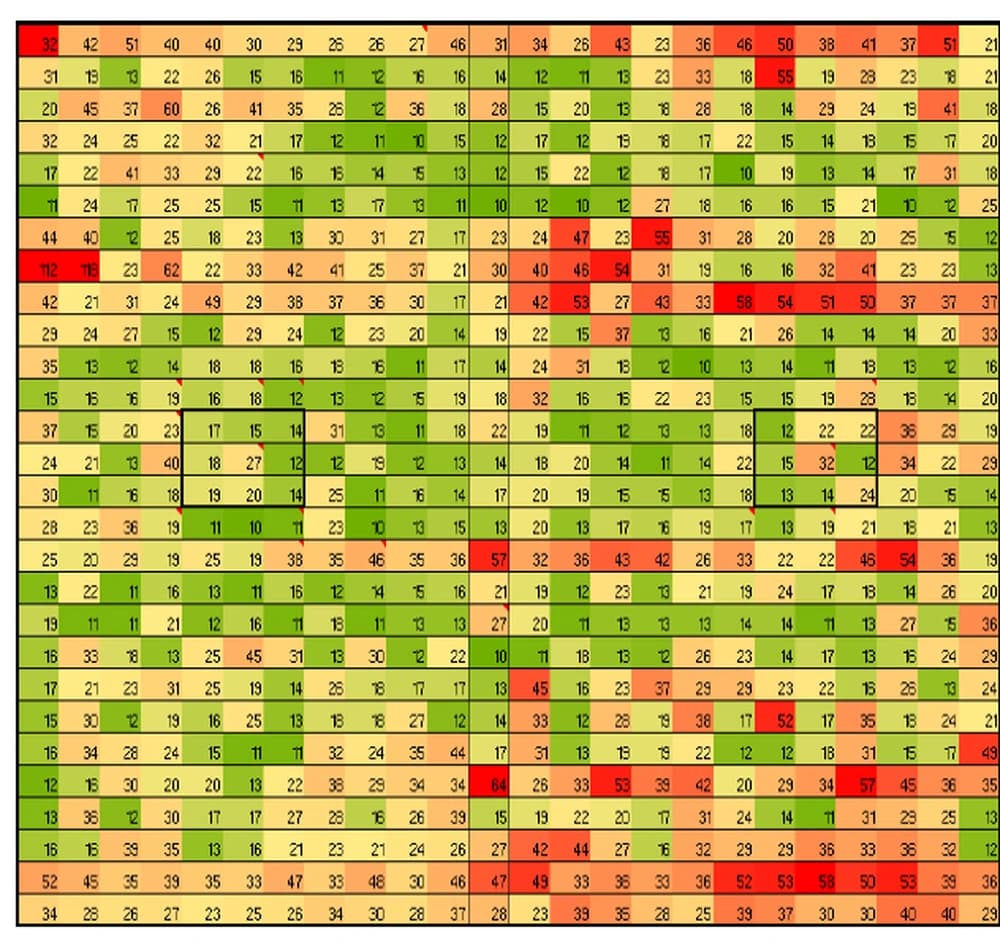
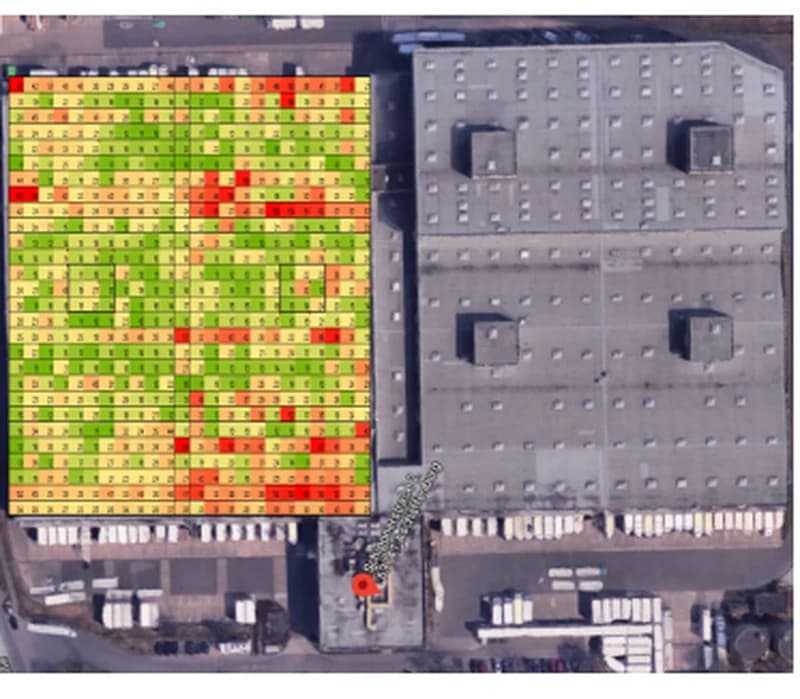
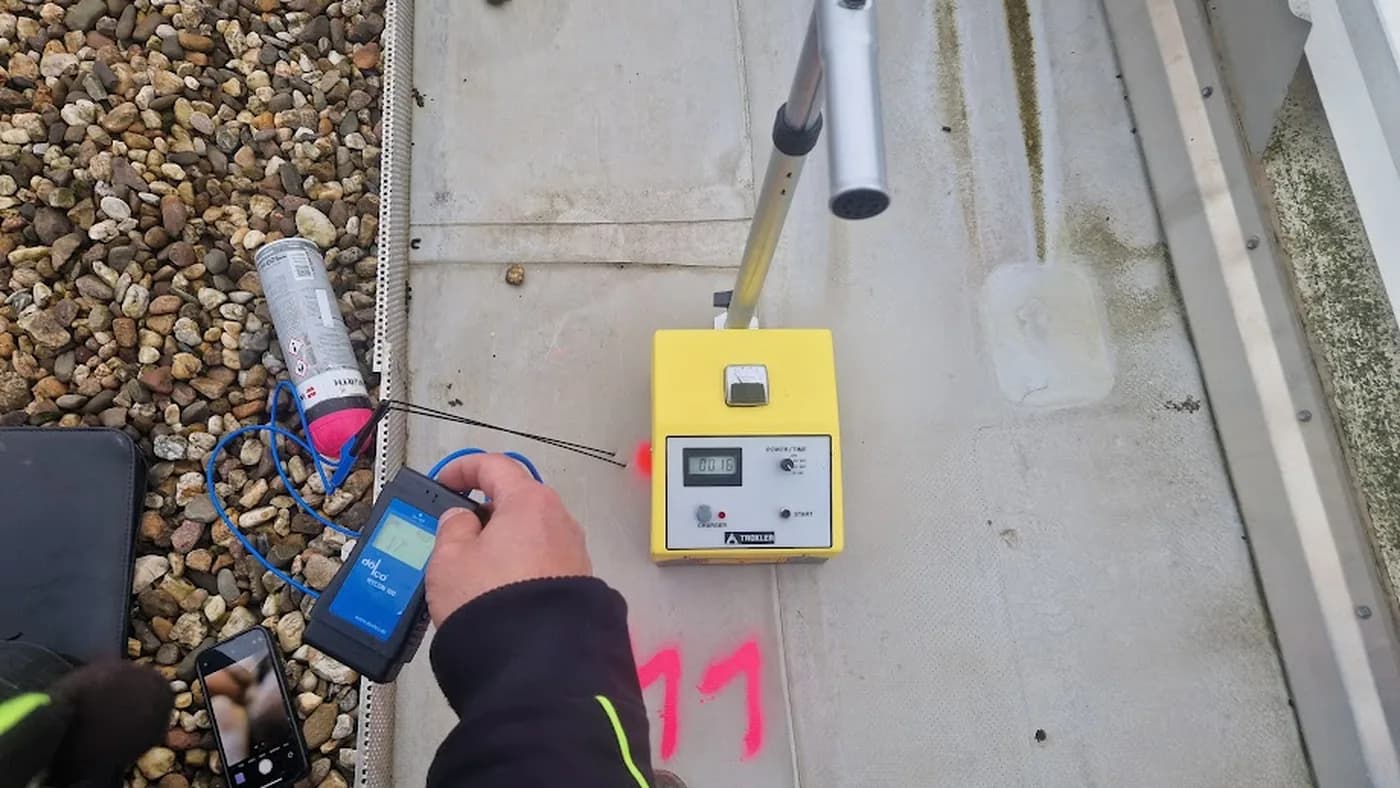
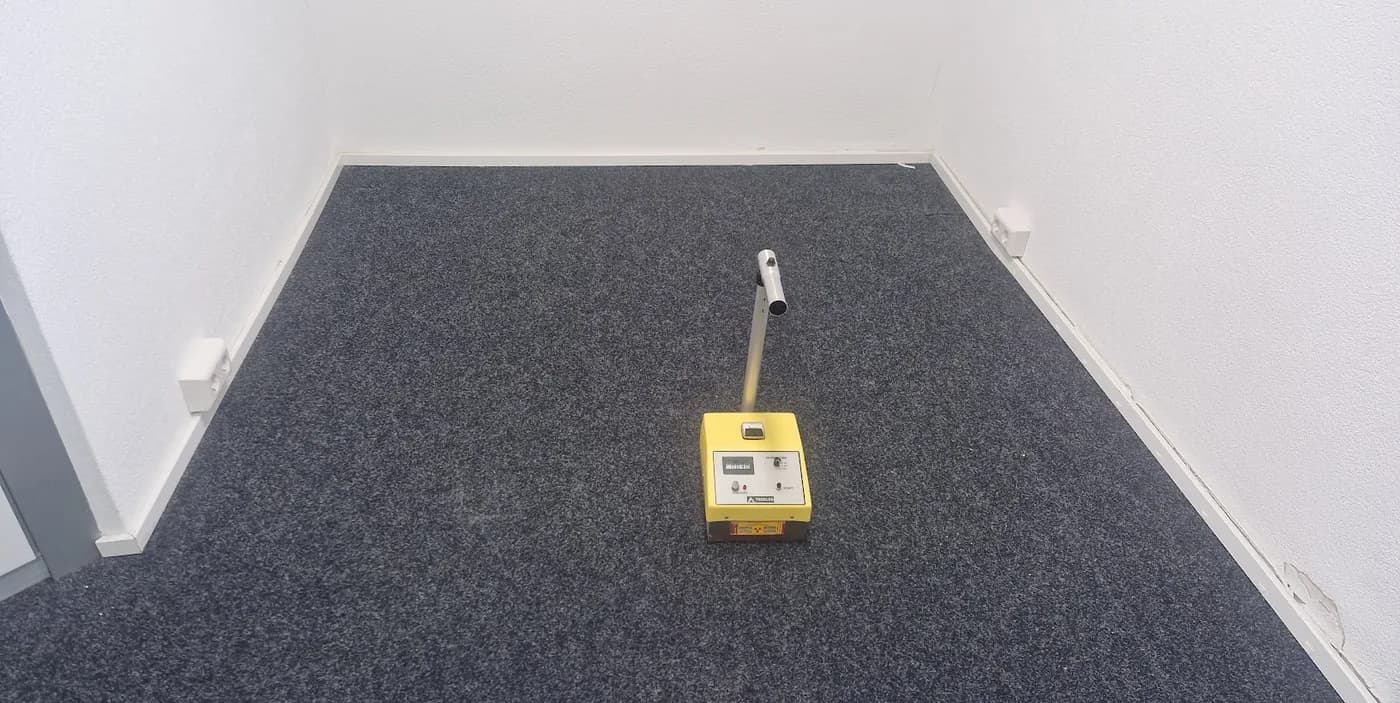
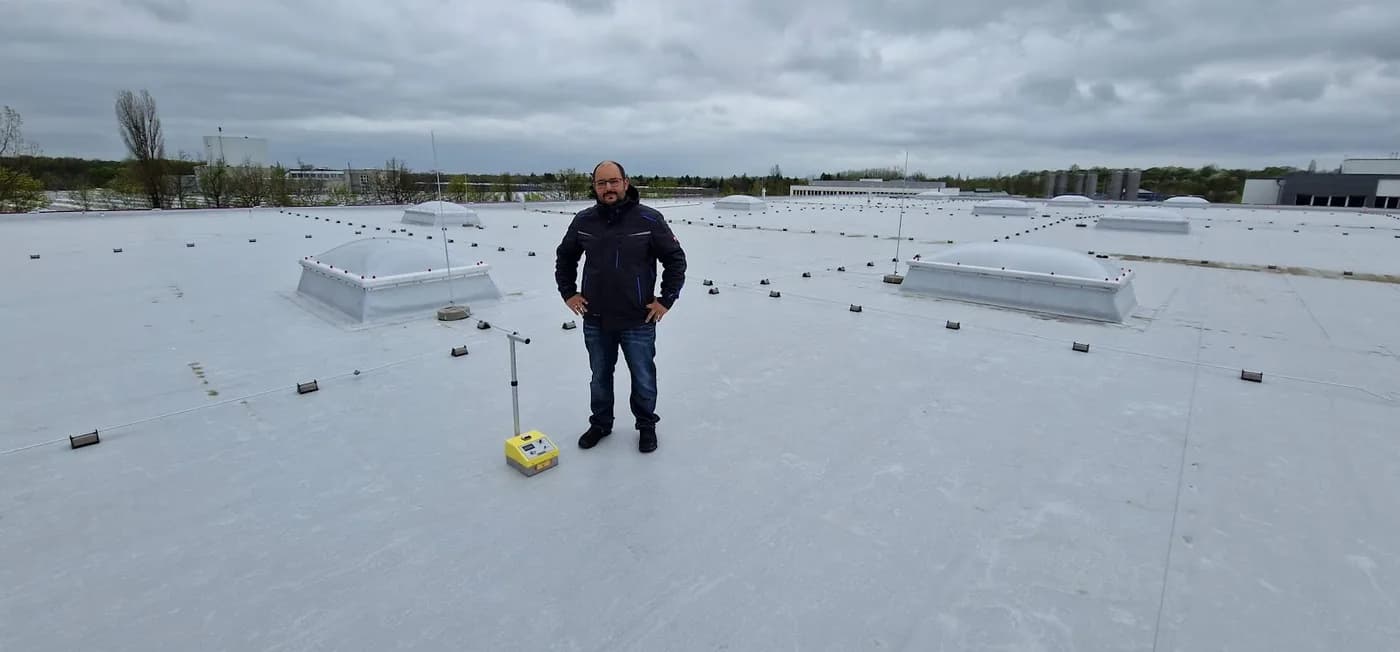
The probe is placed on the surface — we traverse the area in a fixed grid and measure the water content in the structure at every point, without drilling. The result is not a single value, but a map: It shows where it is wet, how wet, and where the dry area begins. On large roof areas, we measure in a 5-meter grid by default, and in buildings in a 1-meter grid.
Measurement principle
Why the probe finds water
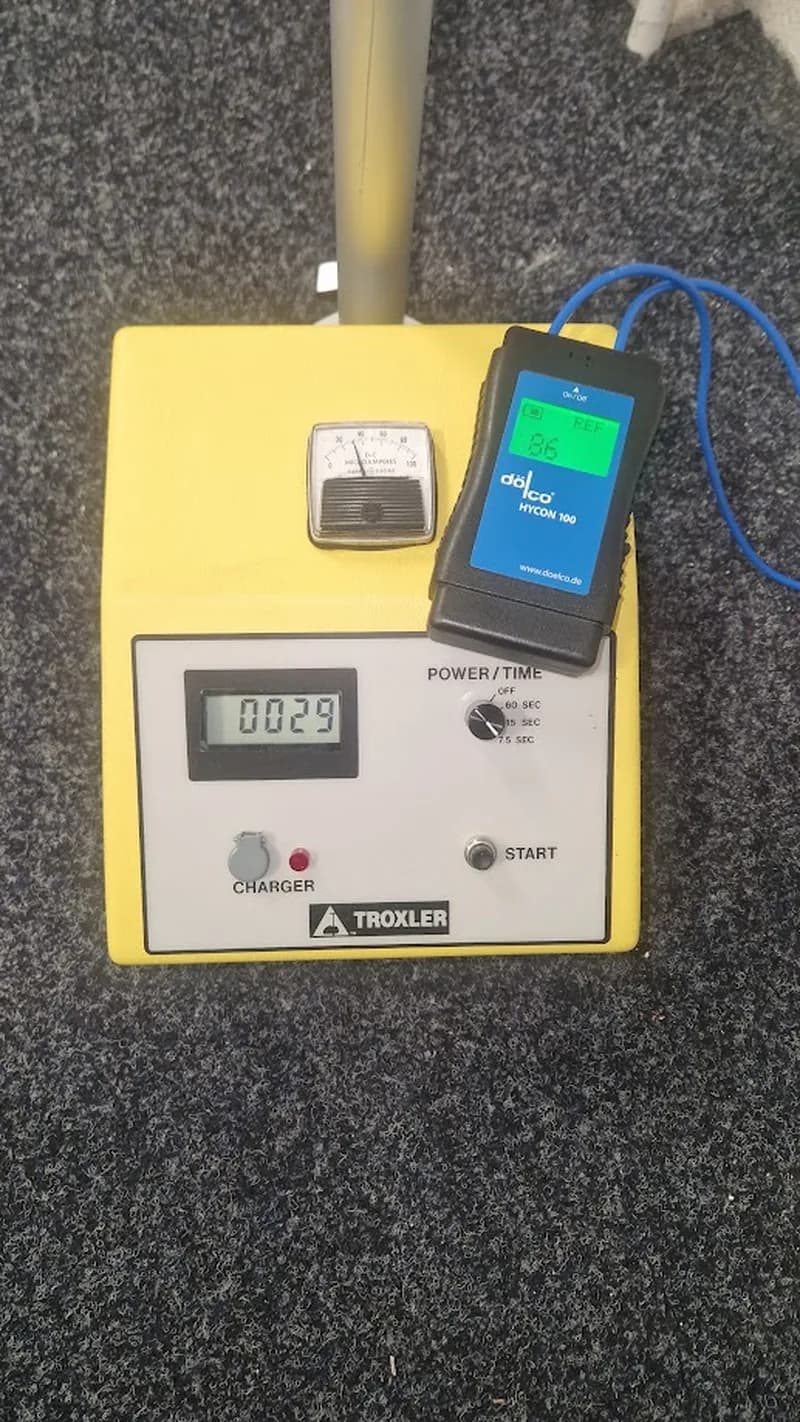
The probe contains an americium-beryllium source that emits fast neutrons. When these hit hydrogen atoms — which are found in the component practically only in water — they lose energy with each collision and are slowed down. A detector counts the returning slow neutrons: the more there are, the more water is under the probe.
The measured value is initially a pulse count, not a percentage. Only the reference measurement at a known dry spot of the same structure turns this into a statement about the water content. That is why every grid measurement includes a control point — and why the evaluation is the task of someone who knows the roof structure.
We work with the isotope probe from the manufacturer Troxler — in industry parlance, the Troxler probe or neutron probe. The procedure has been established in building diagnostics for decades; in road construction, the same principle is used for density determination.
Comparison of methods
Radiometry or microwave measurement?
Both methods measure in a low-impact manner from the surface, both require no drilling. The difference lies in what they physically measure — and thus in which structure causes them to fail.
| Criterion | Radiometry (isotope probe) | Microwave measurement |
|---|---|---|
| Measured variable | Hydrogen in the component — which is found practically only in water | Dielectricity of the material |
| Metal in the structure Trapezoidal sheet metal, reinforcement, aluminum lamination | no influence on the measured value | distorts the measured values, sometimes significantly |
| Conductive substances Salt load, moisture salts in the screed | no influence | distorts the measured values |
| Multi-layer structure | measures across the entire structure | boundary layers between the layers interfere with the measurement |
| Detection depth | entire roof or floor structure | limited per probe head |
| Large areas | measurement point in seconds, several thousand m² per day | can also be used over large areas |
| Approval & radiation protection | requires approval — DÖLCO has nationwide approval | not required |
In a simple, homogeneous structure, microwave measurement is a good tool — it requires no approval and is available at short notice. Its limit is where the structure becomes real: trapezoidal sheet metal under insulation, reinforcement in concrete, aluminum lamination on the vapor barrier, salts in the screed, multiple layers on top of each other. This is exactly where radiometric measurement continues to provide reliable values — it does not ask about the conductivity of the material, but about the hydrogen within it.
Areas of application
Wherever opening is not an option
Radiation protection
Approved, monitored, safe in operation
Handling the radioactive source requires approval under the Radiation Protection Act. DÖLCO has been performing radiometric measurements for around 30 years. In 2026, the approval was renewed and extended to the entire federal territory: Since then, we have been measuring nationwide and no longer just within the jurisdiction of a single authority.
The source is enclosed on all sides and remains in the shielded transport container until it is extended for measurement. Our measurement technicians are instructed as professionally radiation-exposed persons and are monitored dosimetrically.
There is no danger to those present in the building during the measurement: The safety distance of a few meters is maintained, and operations do not have to be stopped.
Radiation Protection Authority
Procedure
From inquiry to moisture plan
Frequently asked questions
What clients want to know
Is the measurement dangerous for residents or employees?
How large can the area be?
Does drilling have to be done for the measurement?
Does it also work on trapezoidal sheet metal or over reinforcement?
What distinguishes radiometry from microwave measurement?
What does a measurement cost?
Request measurement
Four details are enough for an offer
Area, structure, insulation, and what is on top — these determine grid density, measurement duration, and price. Leave what you don't know blank; we will clarify it over the phone.
Request measurement
We measure nationwide
Briefly describe the object and the question to us — we will tell you if radiometric measurement is the right way.